Should You Consume Marijuana Before Getting a Tattoo?
Cannabis and tattoos have something in common: both have become increasingly visible parts of modern alternative culture. From artistic self-expression and personal identity to creativity and lifestyle choices, these two worlds often overlap. It’s therefore not surprising that some tattoo enthusiasts consider consuming marijuana before getting their next piece of body art.
For some people, smoking weed before getting a tattoo seems like a natural way to calm their nerves. Others believe cannabis might make the experience more enjoyable or help them cope with the discomfort of sitting through a lengthy tattoo session. After all, marijuana is frequently associated with relaxation and pain relief.
But does consuming cannabis before getting tattooed actually make the experience better?
The answer isn’t as straightforward as some people might think. Although cannabis may help certain individuals feel more relaxed, THC can also affect concentration, judgment, heart rate, and anxiety levels. These effects are worth considering before committing to a tattoo, particularly when the appointment involves several hours of work.
So, should you consume marijuana before getting a tattoo? Let’s explore the potential benefits, possible drawbacks, and what cannabis and tattoo professionals have to say about the subject.
Why Some People Consume Marijuana Before Getting Tattooed
Getting a tattoo can be an exciting experience, but it can also be intimidating, especially for first-timers. The sound of the tattoo machine, the anticipation of pain, and the thought of having a permanent design on your body can make some people nervous.

This is one reason why cannabis occasionally enters the conversation before tattoo appointments.
Here are three perceived benefits that make some people consider consuming marijuana before getting tattooed.
Relaxation and Reduced Pre-Tattoo Anxiety
One of the most common reasons people consider smoking weed before getting a tattoo is relaxation.
Certain cannabis products, particularly those containing THC, may produce feelings of calmness or temporary euphoria. For some consumers, these effects can make stressful situations feel less overwhelming.
Someone who feels anxious about needles, pain, or the overall tattooing process might therefore believe cannabis could help them approach the appointment more comfortably.
However, cannabis doesn’t have the same effects on everyone. While some people experience relaxation, others may become more anxious, uncomfortable, or paranoid. The amount consumed, THC concentration, individual tolerance, and personal sensitivity can all influence the experience.
Making the Experience More Enjoyable
Another perceived benefit is that cannabis might make the tattooing experience more enjoyable.
Some people associate marijuana with heightened sensory experiences, improved mood, or a greater appreciation of music and their surroundings. They may believe these effects could make sitting through a long tattoo appointment more pleasant.
However, tattooing requires concentration and communication. Being overly relaxed, distracted, or mentally disconnected isn’t necessarily helpful when discussing design adjustments or responding to the artist’s instructions.
Enjoying the atmosphere is one thing; being sufficiently alert to participate in the tattooing process is another.
The Perception That Cannabis Helps Manage Pain
Perhaps the most interesting reason people consider marijuana before a tattoo is its potential relationship with pain management.
Cannabinoids interact with the body’s endocannabinoid system, which plays a role in several physiological processes, including pain signalling. Some research has investigated cannabinoids for different types of pain, but the results depend on the condition, product, and formulation.
This doesn’t mean cannabis is a reliable solution for tattoo pain.
Tattooing involves repeated needle penetration of the skin, and the resulting discomfort varies depending on the location, size, technique, and individual pain tolerance.
Although some people report that cannabis changes how they perceive discomfort, there is insufficient evidence to establish it as an effective or predictable tattoo pain-management method.
The takeaway: Cannabis might make some people feel more relaxed before a tattoo, but that doesn’t guarantee a better or less painful experience.
The Potential Downsides of Consuming Marijuana Before a Tattoo
While the perceived benefits might sound appealing, there are several important reasons to think twice before consuming cannabis before a tattoo appointment.
Tattooing isn’t surgery, and medical recommendations developed for surgical patients shouldn’t automatically be applied to tattoo clients. Nevertheless, research into cannabis and surgical procedures highlights some effects that are relevant when considering safety, communication, and decision-making.
The American Society of Regional Anesthesia and Pain Medicine (ASRA) published consensus guidelines examining cannabis use around surgical procedures. The guidelines discuss concerns including impaired cognitive function, cardiovascular effects, anxiety, and difficulties with informed consent.
Here are some of the potential downsides worth understanding.
Impaired Judgment and Decision-Making
One of the biggest concerns about consuming marijuana before a tattoo is its effect on cognitive function.
THC, the primary psychoactive compound in cannabis, can temporarily affect:
- Concentration and attention.
- Short-term memory.
- Decision-making abilities.
- Coordination and reaction time.
- Perception of time and surroundings.
These effects matter because getting a tattoo involves making decisions about a permanent change to your body.
You need to understand the design, approve its placement, communicate any adjustments, and give informed consent.
If you’re significantly intoxicated, you may struggle to properly evaluate these decisions. You might also agree to something you wouldn’t have chosen while sober.
A tattoo artist should never feel pressured to proceed if a client appears unable to understand the process or provide informed consent.
Increased Anxiety Instead of Relaxation
Although cannabis is commonly associated with relaxation, it can sometimes have the opposite effect.
Depending on the individual and the amount consumed, THC may trigger:
- Nervousness or restlessness.
- Racing thoughts.
- Paranoia.
- Panic or uncomfortable feelings.
- Increased awareness of physical sensations.
Imagine arriving at a tattoo appointment expecting to feel calm, only to become increasingly anxious once the needle touches your skin.
For someone already nervous about getting tattooed, this could make the experience considerably more difficult.
High-THC products and larger doses may be particularly challenging for people who are sensitive to cannabis or unfamiliar with its effects.
Changes in Heart Rate and Blood Pressure
Cannabis can also affect the cardiovascular system.
According to the US Centers for Disease Control and Prevention (CDC), consuming cannabis can temporarily increase heart rate and blood pressure.
The ASRA guidelines similarly explain that smoking cannabis can produce cardiovascular changes, particularly during the first one to two hours after consumption.
These effects are especially relevant for people with existing cardiovascular conditions or other health concerns.
Although most healthy people won’t necessarily experience serious complications, cannabis-related changes in heart rate and blood pressure are worth considering before an appointment involving prolonged physical discomfort.
Cannabis Doesn’t Guarantee Better Pain Tolerance
Another common misconception is that getting high automatically makes tattoo pain easier to tolerate.
Unfortunately, pain perception is complicated.
Cannabis affects people differently, and its relationship with pain depends on several factors, including THC concentration, frequency of use, individual sensitivity, and the type of discomfort involved.
Some people report feeling less bothered by certain sensations, while others become more aware of discomfort or find it harder to remain comfortable.
Research involving surgical patients has also identified potential concerns about pain management among regular cannabis users. The ASRA guidelines discuss evidence associating cannabis use with higher postoperative pain scores and increased opioid requirements in some patient populations.
These findings don’t establish what will happen during a tattoo session, but they certainly challenge the assumption that cannabis always improves pain tolerance.
Communication With Your Tattoo Artist
A successful tattoo session depends on communication between the client and the artist.
You need to discuss the design, placement, dimensions, shading, colours, and any modifications before the tattoo begins. During the appointment, you may also need to communicate discomfort, ask for breaks, or respond to instructions.
Being under the influence can make these conversations more difficult.
You might struggle to explain what you want, misunderstand instructions, or have trouble expressing concerns clearly.
Your tattoo artist also needs to be confident that you’re comfortable with the decisions being made.
Ultimately, being sober helps ensure that everyone is on the same page throughout the appointment.
What Does A Cannabis Chef Have to Say?

Cannabis isn’t just about getting high. Understanding the plant, its different compounds, consumption methods, and individual effects requires knowledge that goes beyond popular stereotypes.
That’s why we wanted to approach this topic from another perspective by including insights from cannabis chef Antonella Moniz.
Through her work in cannabis gastronomy, Antonella explores the relationship between cannabis, food, flavour, and the overall experience of consuming the plant.
Her perspective offers an interesting opportunity to look beyond the assumption that cannabis always produces the same effects.
A Cannabis Chef’s Perspective on Getting High Before a Tattoo
When discussing cannabis consumption, one of the first things to understand is that the experience isn’t universal.
Some people associate cannabis with relaxation, while others may experience increased sensitivity, anxiety, or an uncomfortable change in perception. The plant’s effects depend on the individual, the product, its composition, and how it’s consumed.
From a culinary perspective, understanding these differences matters.
Smoking cannabis and consuming an edible, for example, aren’t interchangeable experiences. Inhaled THC generally produces effects more quickly, while edibles take longer to produce noticeable effects and can have a more prolonged duration.
This difference matters when considering an activity such as getting a tattoo.
Someone who consumes an edible shortly before an appointment might not feel its full effects immediately. The experience could become significantly different as the appointment progresses.
THC concentration is another consideration. Products with higher THC content can produce stronger psychoactive effects, potentially increasing the likelihood of anxiety, impaired concentration, or unwanted experiences.
When it comes to pain, it’s also important to separate personal experiences from established evidence. Just because someone feels more comfortable during a particular activity after consuming cannabis doesn’t mean the plant provides reliable pain relief for everyone.
Would I recommend consuming cannabis immediately before a tattoo?
From a responsible-consumption perspective, understanding the potential effects is more important than assuming cannabis will make the experience easier. A tattoo requires clear communication, informed decisions, and awareness of what’s happening to your body.
There are plenty of opportunities to explore cannabis through food and other experiences. A tattoo appointment, however, is probably not the ideal moment to experiment with an unfamiliar product or dose.
You can discover more about Antonella Moniz and her work at https://weedstripes.com/
What Do Tattoo Artists Recommend?
While cannabis consumers may have different opinions about getting high before a tattoo, the practical perspective of tattoo professionals is particularly important.
Tattoo artists work closely with clients throughout the process. They understand how important concentration, communication, preparation, and consent are to achieving a successful result.
Although individual studio policies vary, arriving sober is generally the safest recommendation.
Here are some practical tips to follow before your appointment.
Arrive Sober and Ready to Communicate
Your tattoo artist needs you to be mentally present throughout the consultation and tattooing process.
Arriving sober makes it easier to:
- Understand the artist’s recommendations.
- Approve the final design.
- Discuss placement and sizing.
- Communicate discomfort or concerns.
- Make informed decisions about your tattoo.
Remember that getting tattooed is a collaborative experience. Your artist needs your participation just as much as you need their technical skills.
Avoid Consuming Cannabis Immediately Before Your Appointment
If you’re wondering whether smoking weed before getting a tattoo is a good idea, the safest approach is to avoid it.
The same applies to edibles and other THC-containing products.
Their effects can interfere with your ability to make decisions, communicate clearly, and remain comfortable throughout the session.
There isn’t an established, universally applicable waiting period for tattoo appointments following cannabis consumption. Unlike surgery, tattooing doesn’t have an equivalent evidence-based cannabis timing guideline.
If you’ve consumed cannabis and still feel its effects, contact your tattoo studio rather than assuming you’re ready to proceed.
Be Honest About Cannabis Use
If you regularly consume marijuana, it’s worth being open about it with your tattoo artist.
This doesn’t mean you need to share unnecessary personal information. However, being honest about recent consumption can help the artist make an informed decision about whether the appointment should go ahead.
If you’re taking cannabis for medical reasons, you should also consider discussing relevant concerns with your healthcare professional.
Reschedule if You’re Intoxicated
A responsible tattoo artist should prioritise client safety over completing an appointment.
If you’re visibly intoxicated, struggling to communicate, or unable to provide informed consent, postponing the session is the sensible decision.
It’s much better to reschedule than risk making permanent decisions while impaired.
Prepare Your Body Before Getting Tattooed
Fortunately, there are several ways to make your tattoo appointment more comfortable without relying on cannabis.
Consider the following preparation tips:
- Eat beforehand: Have a proper meal to avoid arriving hungry.
- Stay hydrated: Drink enough water before your appointment.
- Get enough sleep: Being well-rested can help you manage discomfort.
- Wear comfortable clothing: Choose something that provides easy access to the tattoo area.
- Follow studio instructions: Respect any preparation guidelines provided by your artist.
- Bring appropriate refreshments: For longer sessions, ask your artist whether you can bring snacks and water.
These simple steps can help you feel more prepared and comfortable.
What About Consuming Marijuana After Getting a Tattoo?
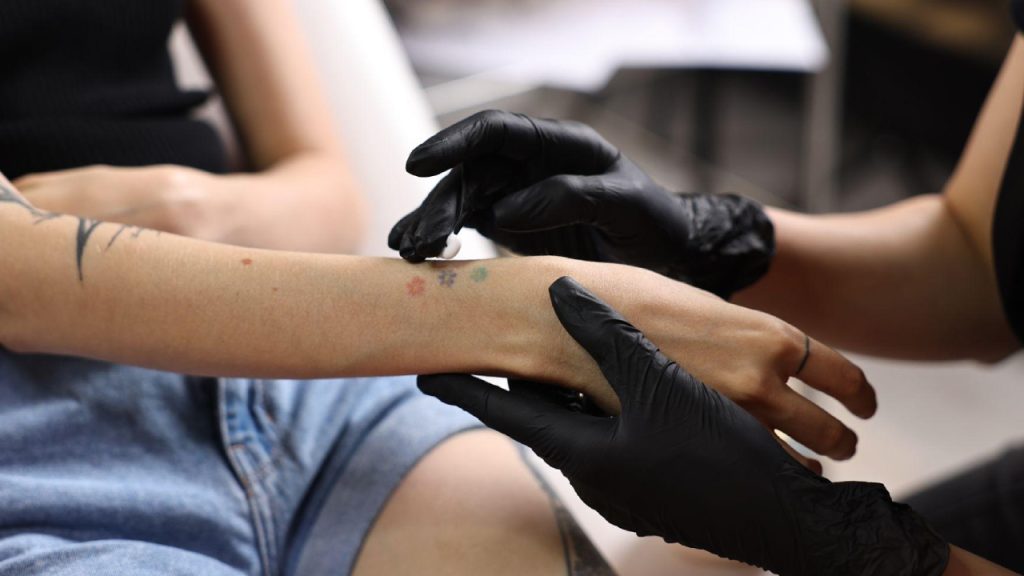
What if you decide to wait until the appointment is over? Is smoking weed after getting a tattoo a problem?
The considerations are somewhat different, but responsible consumption is still important.
Once the tattoo is finished, your skin has undergone a controlled injury. The tattooed area needs time to heal, and following proper aftercare instructions is essential.
Cannabis doesn’t automatically interfere with tattoo healing, but there are some practical considerations.
Be Careful With Impairment During Aftercare
Immediately after getting tattooed, your artist will explain how to care for your new tattoo.
Depending on the studio’s recommendations, this may include:
- Washing your hands before touching the tattoo.
- Cleaning the area according to the artist’s instructions.
- Applying an appropriate aftercare product.
- Avoiding unnecessary touching or scratching.
- Protecting the tattoo from excessive sunlight.
- Avoiding swimming and soaking while the tattoo heals.
If you consume cannabis and become significantly impaired, you might forget important instructions or become less attentive to your aftercare routine.
For this reason, it’s sensible to complete the necessary aftercare tasks while fully alert.
Avoid Neglecting Your Recovery
A fresh tattoo needs consistent care.
Regardless of whether you consume cannabis, avoid activities that could compromise healing or expose the tattoo to unnecessary irritation and contamination.
Smoking cannabis also involves inhaling smoke, which carries respiratory and cardiovascular considerations independent of tattoo healing.
There isn’t enough evidence to establish that occasional cannabis consumption after tattooing directly delays skin healing. However, it’s equally important not to assume that cannabis offers any benefits for the recovery process.
If you experience unusual swelling, increasing redness, worsening pain, pus, or fever, seek medical advice rather than trying to manage possible complications yourself.
The best approach is simple: prioritise your tattoo’s aftercare and avoid letting intoxication interfere with the healing process.
Final Verdict: Is It Worth It?
So, should you consume marijuana before getting a tattoo?
Although cannabis may help certain people feel relaxed, consuming it immediately before a tattoo appointment isn’t necessarily a good idea.
THC can affect concentration, memory, decision-making, and communication. It can also increase anxiety in some individuals and temporarily influence heart rate and blood pressure.
Perhaps most importantly, cannabis isn’t a proven or predictable way to manage tattoo pain.
While some people might describe positive experiences, individual reactions vary considerably. What feels relaxing to one person could make another feel uncomfortable, distracted, or overwhelmed.
The safest recommendation is to arrive at your tattoo appointment sober, well-rested, hydrated, and ready to communicate with your artist.
If you want to enjoy cannabis, consider doing so separately from your tattoo appointment, when you don’t need to make important decisions or participate in a procedure requiring your full attention.
Getting a tattoo should be an enjoyable experience, but it should also be a responsible one. Your body art is permanent, so making clear decisions and prioritising your safety will always be more important than trying to enhance the experience with marijuana.