Ear Piercing Combinations: How to Create a Unique Curated Ear
A beautifully curated ear is more than a collection of piercings. It is a personal expression of style, creativity, and individuality. From delicate lobe studs to statement-making helix hoops, the right combination of piercings and jewelry can transform your ear into a stylish arrangement that reflects your personality.
Whether you prefer a minimalist aesthetic, an elegant collection of delicate pieces, or a bold, asymmetrical look, creating a curated ear gives you the freedom to experiment with different placements, shapes, metals, and designs.
However, achieving a balanced look involves more than choosing attractive jewelry. You also need to consider your ear anatomy, piercing placement, jewelry proportions, and healing time. Planning your piercings carefully helps you create a cohesive appearance without putting unnecessary stress on your ears.
In this guide, we explore popular ear piercing combinations, explain how to mix different placements, and share practical tips for designing a unique curated ear that suits your personal style.
What Is a Curated Ear?
A curated ear is a thoughtfully arranged combination of multiple ear piercings and jewelry pieces. Rather than choosing piercings individually, the idea is to create a coordinated look in which every piece complements the others.
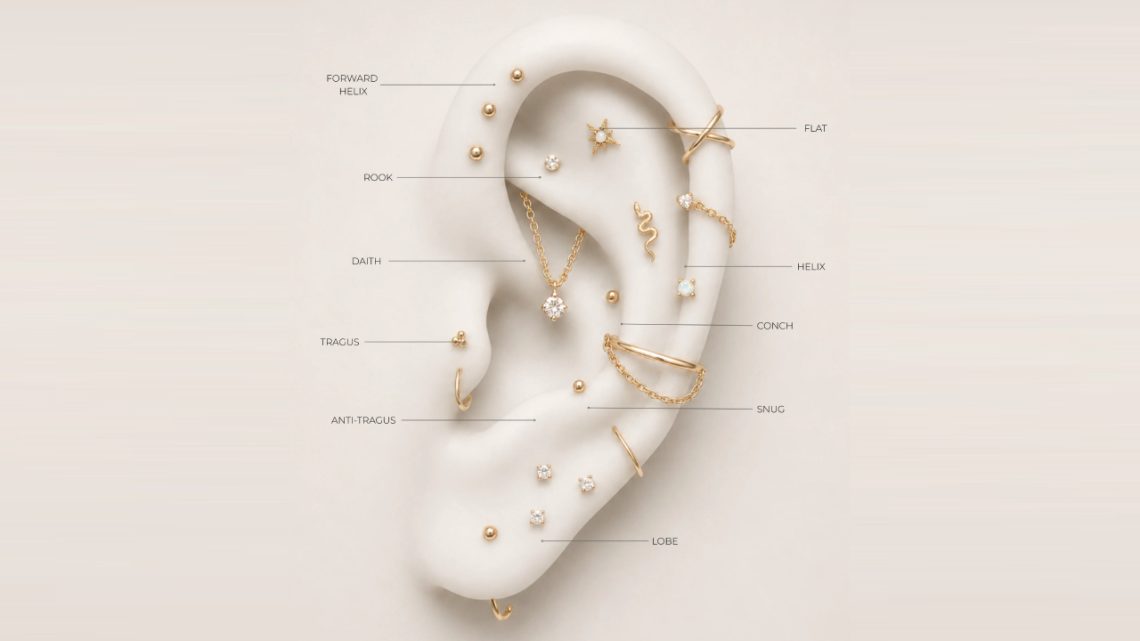
A curated ear can include several piercing placements, such as:
- Lobe: The classic and versatile placement on the soft lower part of the ear.
- Upper lobe: A piercing positioned above the traditional first or second lobe piercing.
- Helix: A piercing through the upper outer cartilage.
- Forward helix: A piercing through the cartilage near the front of the ear.
- Conch: A piercing through the central cartilage of the ear.
- Tragus: A piercing through the small cartilage flap near the ear canal.
- Rook: A piercing through the inner cartilage fold above the daith.
- Daith: A piercing through the innermost cartilage fold above the ear canal.
The beauty of this trend is its flexibility. You do not need a particular number of piercings to achieve a curated appearance. Even two or three carefully selected placements can create an elegant result.
The goal is to build a balanced arrangement that looks intentional rather than overcrowded.
Popular Ear Piercing Types for a Curated Ear
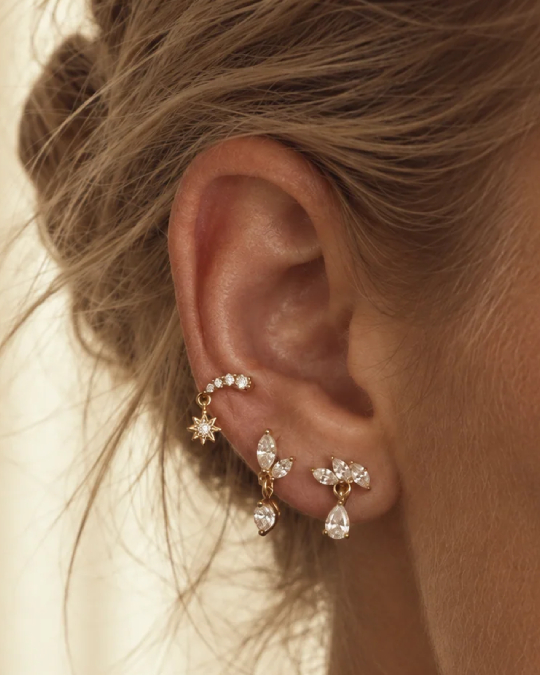
Before deciding on your ideal combination, it helps to understand the different piercing placements and the styles they can create.
1. Lobe Piercings: The Foundation of Your Curated Ear
Lobe piercings are among the most popular choices because they are versatile, relatively straightforward to style, and suitable for many jewelry designs.
A single lobe piercing creates a classic look, while multiple lobe piercings offer additional opportunities to experiment.
Popular lobe combinations include:
- Two small studs arranged vertically.
- Three lobe piercings featuring graduated gemstone sizes.
- A statement first-lobe hoop paired with delicate upper-lobe studs.
- Mixed-metal studs for a contemporary appearance.
Because lobe piercings sit below the cartilage, they can provide a visual foundation for more elaborate arrangements higher on the ear.
Styling tip: Try combining a small gemstone stud with a thin gold hoop and a tiny decorative stud. This creates dimension without making the lower ear look too busy.
2. Helix Piercings: Adding Detail to the Outer Ear
The helix piercing passes through the upper outer cartilage and is a favorite for creating delicate, layered looks.
It works particularly well with minimalist jewelry, including:
- Small gold or silver hoops.
- Tiny gemstone studs.
- Flat-back labret studs.
- Delicate decorative shapes.
A single helix piercing adds a subtle accent, while double or triple helix piercings create a more noticeable arrangement.
For example, two small hoops positioned along the upper ear can create a coordinated appearance. Alternatively, a combination of a gemstone stud and a delicate hoop introduces contrast.
Styling tip: If you already have multiple lobe piercings, a single helix piercing can extend the visual arrangement upward and create a balanced silhouette.
3. Conch Piercings: Creating a Statement
The conch piercing is located in the central cartilage area of the ear. Its distinctive position makes it an excellent focal point for a curated ear.
There are two commonly discussed conch placements:
- Inner conch: Located in the central bowl of the ear.
- Outer conch: Positioned closer to the outer cartilage.
A conch piercing can accommodate a flat-back stud or, once appropriately healed and professionally assessed, a hoop designed for the individual’s anatomy.
Some popular jewelry choices include small diamonds, opal studs, gold balls, and decorative floral designs.
Styling tip: A conch stud paired with simple lobe jewelry creates an elegant contrast. If you prefer a more dramatic appearance, coordinate the conch with a helix hoop and smaller surrounding studs.
4. Tragus Piercings: A Subtle Finishing Touch
The tragus is the small cartilage section located just in front of the ear canal.
Although relatively small, this placement can make a noticeable difference to the overall arrangement.
Tragus jewelry is typically delicate because of the limited space available. Popular options include:
- Tiny gemstone studs.
- Minimalist gold balls.
- Small flat-back decorative studs.
- Subtle geometric designs.
A tragus piercing works particularly well alongside lobe and conch piercings because it introduces detail closer to the face.
Styling tip: Choose a simple tragus stud if your other piercings already feature larger or more decorative jewelry.
5. Rook Piercings: Adding an Unexpected Detail
A rook piercing passes through the raised cartilage fold located above the daith.
It is an interesting option for anyone who wants something slightly different from the more familiar lobe and helix combinations.
Curved barbells and appropriately fitted decorative jewelry are common choices for this placement.
Because the rook sits within an inner cartilage fold, it adds depth to your arrangement rather than extending the design along the outer ear.
Styling tip: Pair a rook piercing with simple lobe studs and a delicate helix piece to create visual interest without overcrowding the ear.
6. Daith Piercings: A Distinctive Inner-Ear Accent
The daith piercing passes through the innermost cartilage fold above the ear canal.
Its location makes it especially distinctive, and it is often styled with small rings or decorative circular jewelry.
Popular choices include:
- Smooth gold rings.
- Small clicker hoops.
- Delicate gemstone rings.
- Subtle textured designs.
A daith piercing can work beautifully with a conch or tragus piercing, provided the ear anatomy allows sufficient space.
Styling tip: Since the daith occupies a prominent inner-ear position, choose jewelry that complements rather than competes with nearby piercings.
Best Ear Piercing Combinations to Try
Once you understand the different placements, you can start combining them to create a look that feels personal.
Here are some popular curated ear combinations for different aesthetics.
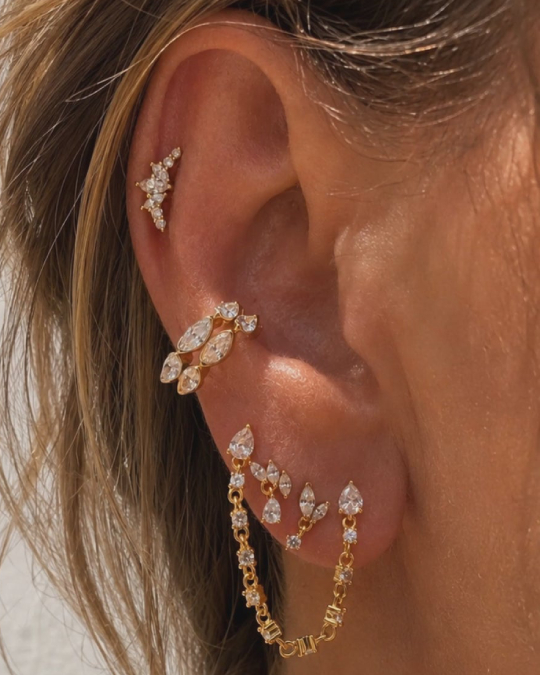
1. Minimalist Ear Piercing Combination
If you prefer understated jewelry, a minimalist curated ear is an excellent starting point.
Consider combining:
- First-lobe piercing with a tiny gold stud.
- Second-lobe piercing with a delicate gemstone.
- Single helix piercing with a thin hoop.
The result is clean, elegant, and easy to coordinate with everyday outfits.
Choose jewelry with simple silhouettes and similar finishes to maintain a cohesive appearance.
2. Elegant and Feminine Ear Piercing Combination
For a softer, more delicate look, combine small gemstones, subtle pearls, and fine gold jewelry.
An example arrangement includes:
- First lobe: Small pearl stud.
- Second lobe: Tiny diamond-style stud.
- Helix: Delicate gold hoop.
- Conch: Small gemstone stud.
This combination creates a beautiful balance between sparkle and simplicity.
It is particularly suitable for people who enjoy timeless jewelry rather than bold statement pieces.
3. Bold and Edgy Curated Ear
If you prefer a more adventurous aesthetic, experiment with contrasting jewelry shapes and multiple cartilage placements.
A possible arrangement includes:
- Two or three lobe piercings.
- Double helix piercings.
- A conch stud.
- A rook piercing.
- A tragus stud.
Black titanium, silver-colored jewelry, geometric shapes, and textured hoops can help create a more alternative appearance.
Remember that you do not need to get all these piercings simultaneously. Build the arrangement gradually as each piercing heals.
4. Asymmetrical Ear Piercing Combination
One of the most interesting curated ear trends is asymmetry.
Instead of creating identical arrangements on both ears, give each ear its own personality.
For example:
| Left ear | Right ear |
|---|---|
| Double lobe | Triple lobe |
| Single helix | Double helix |
| Conch stud | Daith hoop |
| Minimalist tragus | Rook piercing |
The secret is to maintain a shared design element, such as matching metals, gemstones, or jewelry shapes.
This creates visual consistency without requiring both ears to look identical.
5. Delicate Stacked Lobe Combination
Stacked lobe piercings are ideal if you want a layered appearance without immediately committing to several cartilage piercings.
Try combining:
- A medium-sized first-lobe hoop.
- A tiny second-lobe gemstone.
- A third-lobe decorative stud.
- A small upper-lobe accent.
Varying the jewelry sizes creates depth and makes the arrangement look more intentional.
How to Choose Jewelry for a Curated Ear
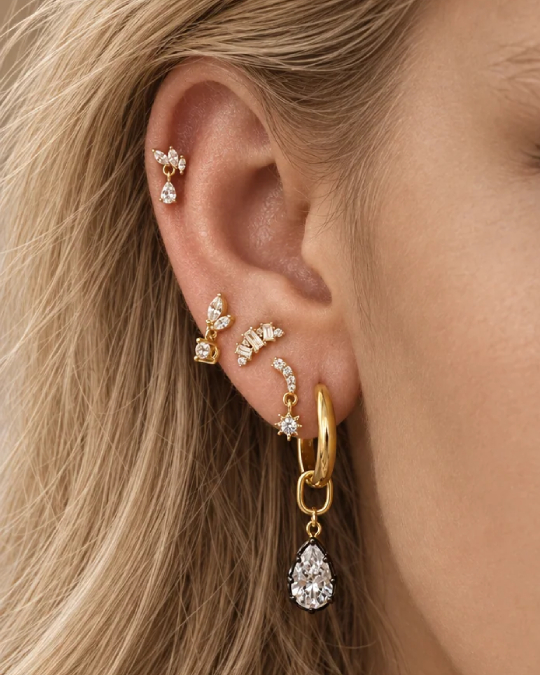
Choosing the right jewelry is just as important as selecting the piercing placements.
Even a simple combination can look sophisticated when the jewelry pieces complement one another.
Mix Metals for a Modern Look
Traditionally, people often choose either gold or silver jewelry. However, mixing metals has become a popular way to add personality to curated ears.
Consider these combinations:
- Yellow gold and white gold for a subtle contrast.
- Silver and gold for a contemporary aesthetic.
- Rose gold and yellow gold for a warm appearance.
- Silver and black titanium for a more alternative style.
If you decide to mix metals, repeat each finish somewhere in the arrangement to make the overall design feel intentional.
Experiment With Different Jewelry Shapes
Using the same shape for every piercing can make your curated ear look repetitive.
Instead, introduce a variety of designs:
- Studs: Ideal for creating small focal points.
- Hoops: Add movement and a softer appearance.
- Gemstones: Introduce sparkle and color.
- Geometric designs: Create a modern, structured look.
- Pearls: Add an elegant and timeless touch.
- Textured jewelry: Introduces dimension and visual interest.
A good approach is to combine one or two statement pieces with simpler designs.
Choose High-Quality Materials
Jewelry material matters for both appearance and comfort.
For fresh piercings, ask your professional piercer about appropriately sized, high-quality jewelry made from materials such as:
- Implant-grade titanium meeting recognized material standards.
- Solid nickel-free 14k or 18k gold.
- Niobium.
- Other materials specifically approved by a reputable piercer for initial piercing use.
Avoid low-quality plated jewelry and materials containing problematic amounts of nickel, particularly in healing piercings.
Also remember that jewelry suitable for a fully healed piercing may not be appropriate for a fresh one.
How Ear Anatomy Affects Your Piercing Combinations
Not every piercing placement works for every person. Your ear’s natural shape, cartilage structure, folds, and available space influence which combinations are possible.
This is why professional assessment is essential before planning several piercings.
Consider Your Ear Shape
Some people have more prominent outer cartilage, while others have smaller ears or less pronounced inner folds.
These differences can affect:
- Whether a rook piercing is anatomically suitable.
- How much space is available for multiple helix piercings.
- Whether a conch hoop can fit comfortably.
- Whether the tragus provides sufficient tissue for piercing.
- How closely different placements can be positioned.
A professional piercer can assess your anatomy and recommend placements that are both aesthetically pleasing and appropriate.
Pay Attention to Spacing
Spacing is important when creating multiple piercings.
If jewelry pieces sit too close together, they may overlap visually or physically interfere with one another.
A balanced arrangement should leave enough room for each piece to be appreciated individually.
Your piercer should also consider the jewelry’s dimensions, swelling during healing, and the potential for pressure or friction.
Design Around Your Natural Ear Structure
Rather than copying an arrangement from social media exactly, use inspiration photos as a starting point.
A placement that looks beautiful on someone else’s ear may not work on yours.
The best curated ear is one that complements your natural anatomy.
How to Plan Multiple Ear Piercings Without Overwhelming Healing
One of the most important aspects of creating a curated ear is understanding that piercings need time to heal.
Getting several piercings at once may seem like a convenient way to achieve your desired look, but it can increase swelling, irritation, and aftercare demands.
Cartilage piercings generally take considerably longer to heal than lobe piercings.
Create a Piercing Timeline
Instead of rushing into every placement, consider building your curated ear in stages.
| Stage | Possible piercings | Main focus |
|---|---|---|
| Stage 1 | First and second lobe | Establish your foundation |
| Stage 2 | Single helix | Introduce an upper-ear detail |
| Stage 3 | Conch or tragus | Add a central or inner-ear accent |
| Stage 4 | Rook or daith | Complete the arrangement if suitable |
This is an illustrative planning sequence, not a universal schedule. Your piercer should determine when another piercing is appropriate based on your existing healing progress.
Understand Healing Times
Different piercing placements have different healing requirements.
The following are approximate ranges, and individual experiences vary.
| Piercing type | Approximate healing time |
|---|---|
| Earlobe | 6–12 weeks or longer |
| Helix | 6–12 months |
| Conch | 6–12 months |
| Tragus | 6–12 months |
| Rook | 6–12 months |
| Daith | 6–12 months |
A piercing can look healed externally while the tissue inside is still recovering.
Never change jewelry or add another piercing simply because the area appears comfortable. Follow your piercer’s advice.
Follow Proper Aftercare
Good aftercare helps support the healing process.
General recommendations include:
- Clean the piercing using sterile saline wound wash as advised by your piercer.
- Avoid touching or twisting the jewelry unnecessarily.
- Wash your hands before any necessary contact.
- Avoid sleeping directly on healing cartilage piercings.
- Keep hair products, cosmetics, and other potential irritants away from the piercing.
- Avoid swimming in potentially contaminated water while the piercing is healing.
- Do not remove jewelry from a potentially infected piercing without medical guidance.
Persistent swelling, increasing pain, warmth, spreading redness, or discharge can indicate a problem. Cartilage infections can become serious, so seek medical advice promptly if you notice concerning symptoms.
Common Mistakes to Avoid When Creating a Curated Ear
Even the most beautiful piercing arrangement can become uncomfortable or visually unbalanced if it is not planned properly.
Here are some common mistakes to avoid.
1. Getting Too Many Piercings at Once
More piercings do not automatically create a better curated ear.
Multiple fresh piercings can increase the demands on your body’s healing process and make aftercare more complicated.
Start with a manageable number and gradually build your design.
2. Choosing Jewelry That Is Too Large
Oversized jewelry can make a small ear look crowded.
Instead, consider the proportions of your ear and the amount of space available around each placement.
Mixing small, medium, and occasional statement pieces usually creates a more balanced arrangement.
3. Ignoring Your Ear Anatomy
Not every ear can accommodate every piercing.
Avoid choosing placements simply because they look attractive in photographs. Always have your anatomy assessed by an experienced professional.
4. Changing Jewelry Too Early
Changing jewelry before a piercing has fully healed can irritate the tissue and potentially delay recovery.
Always follow professional guidance regarding jewelry changes and downsizing.
5. Following Trends Without Considering Personal Style
Curated ear trends are a great source of inspiration, but your arrangement should reflect your preferences.
If you love minimalist jewelry, there is no reason to get several bold cartilage piercings just because they are fashionable.
Choose pieces that you will enjoy wearing long-term.
How to Create a Curated Ear That Reflects Your Personality
The most attractive curated ears have a sense of individuality.
Rather than following a strict formula, think about the overall impression you want to create.
Choose a Theme
A theme helps connect different piercings and jewelry pieces.
Some popular ideas include:
| Curated ear theme | Jewelry inspiration |
|---|---|
| Minimalist | Tiny studs, delicate hoops, simple gold |
| Celestial | Stars, moons, and crystal accents |
| Romantic | Pearls, floral details, rose gold |
| Modern | Geometric shapes and mixed metals |
| Edgy | Black titanium, textured hoops, bold studs |
| Classic | Diamonds, simple gold hoops, elegant pearls |
You can also combine elements from different themes to develop something more personal.
Balance Statement Pieces With Minimalist Jewelry
A curated ear generally looks more harmonious when it has a clear focal point.
For example, a decorative conch stud can become the centerpiece of your arrangement, while smaller lobe and helix pieces provide supporting details.
Think of your jewelry as a composition:
- One statement piece creates visual interest.
- Smaller studs add subtle detail.
- Hoops introduce variation.
- Matching finishes connect the entire arrangement.
Use Inspiration Photos
Save pictures of ear piercing combinations that appeal to you.
Look for recurring details, such as jewelry colors, placement patterns, and shapes.
You can show these images to your piercer and discuss which elements are suitable for your anatomy.
Remember that your final design may need adjustments to achieve comfortable spacing and appropriate placement.
Final Thoughts:
Creating a unique curated ear is an opportunity to express your personal style through carefully selected piercing placements and jewelry combinations.
Whether you prefer delicate lobe studs, elegant helix hoops, a statement conch, or distinctive rook and daith piercings, there are countless ways to build an arrangement that feels completely your own.
The key is to think about balance, choose complementary jewelry, and consider your natural ear anatomy before committing to new placements.
Most importantly, take your time. A beautiful curated ear does not need to happen overnight. Gradually adding piercings, allowing each one to heal properly, and selecting high-quality jewelry will help you achieve a comfortable and cohesive result.
Ultimately, the best ear piercing combination is one that makes you feel confident, reflects your personality, and remains enjoyable to wear every day.


